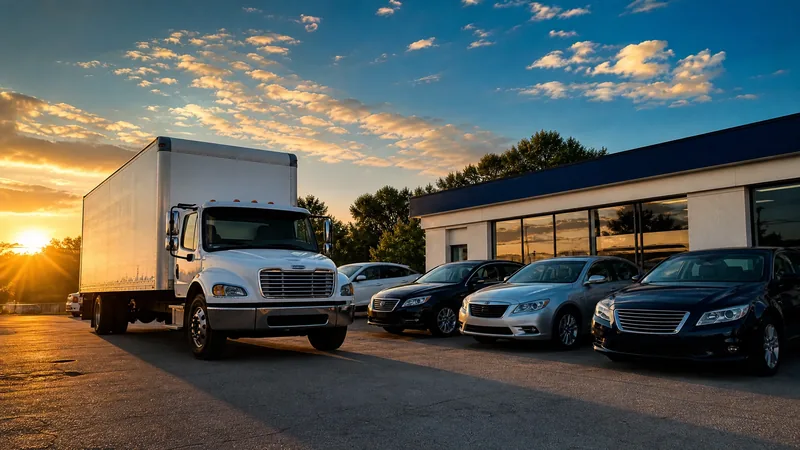
How to Start a Used Car Dealership in Michigan: Secretary of State Dealer License and the $25,000 Bond
How to Start a Used Car Dealership in Michigan: Secretary of State Dealer License and the $25,000 Bond
If you plan to sell used cars in Michigan, the license that matters is the dealer license issued by the Michigan Secretary of State. It is not the entity registration you file with LARA, and it is not the sales tax registration you file with Treasury. Each is a separate step, and mixing them up is the most common reason new applicants stall. This guide covers what the Michigan used car dealer license requires, what to have in hand before you apply, the $25,000 surety bond, and the place-of-business rules that catch most applicants off guard.
This article is informational content, not legal or tax advice. Dealer rules, fees and forms change. Confirm current requirements with the Secretary of State, and talk to a licensed attorney and a CPA before you sign a lease, a bond or a purchase agreement.
Michigan has no general business license, but dealers need one
Michigan does not issue a general statewide business license. LARA's Corporations Division receives and files the documents that form your entity, such as an LLC's Articles of Organization. It does not license businesses. Registering an LLC through the MiBusiness Registry is a filing, not a license. Licensing in Michigan is by trade or activity, and selling vehicles is one of the activities that requires its own license, issued by the Secretary of State under MCL 257.248.
The state license is only one layer. Zoning, municipal approval and sometimes other local permits apply on top of it, and those rules are set by your city, township or village.
Do you need a dealer license?
Under MCL 257.248, a dealer is anyone buying, selling or brokering five or more vehicles in 12 months. Brokering counts, not just buying and selling. If you expect to move only a handful of cars a year, the threshold still matters, so ask the Secretary of State how it applies to your plan before you start buying inventory.
This guide focuses on the Class B used vehicle dealer license. Class A, B and D dealers keep the $25,000 surety bond described below. The annual license fee for Class B is $160, the same fee that applies to Class A, C, D, W and the other classes.
What you need before you apply
Gather these items before you start the application. A single missing document usually means the file waits in someone's queue while you fix it.
- Your entity or assumed name filing. An LLC files Articles of Organization (Form CSCL/CD-700) with LARA for a $50 filing fee. A corporation files Articles of Incorporation for Profit (Form CSCL/CD-500) for a $60 filing fee. A sole proprietorship or general partnership files an assumed name certificate with the county clerk in each county where it does business.
- A resident agent named in your articles. Michigan uses the term resident agent, and the agent must meet the requirements in Step 2.
- A $25,000 surety bond from a surety company.
- Fleet no-fault insurance for your dealer vehicles.
- Written zoning and municipal approval for the address.
- Proof of an established place of business, such as a lease or deed.
- Fingerprints from IdentoGO or a Live Scan provider.
- The $160 annual license fee.
- For Class A and B, at least two dealer plates.
Step-by-step: getting your Michigan dealer license
Step 1: Choose your entity and file it
Many small dealers form an LLC because it keeps business obligations separate from personal assets. Whether an LLC, a corporation or a sole proprietorship fits your situation is a legal and tax decision, so get advice before you file.
To form an LLC, search the MiBusiness Registry business search first to confirm the name is available. The name must contain Limited Liability Company, L.L.C. or L.C., with or without periods. If you need time to line up financing or a site, you can hold the name with Form CSCL/CD-540 for $25. A reservation lasts six months following the month of filing. File the Articles of Organization through the MiBusiness Registry Portal at mibusinessregistry.lara.state.mi.us.
LARA does not publish a guaranteed standard review time for routine filings. Expedited review is available at extra cost: $50 for a 24-hour review of a formation document, $100 for same-day review, $500 for a two-hour review (received by 3 p.m.) and $1,000 for a one-hour review (received by 4 p.m.). Expedite fees are paid on top of the $50 filing fee.
If your LLC will sell under a name other than its legal name, file a Certificate of Assumed Name (Form CSCL/CD-541). For an LLC, the fee is $25. A sole proprietor files with the county clerk instead.
Step 2: Name a resident agent with a real Michigan address
The resident agent must be a Michigan resident, a Michigan corporation, a foreign corporation with a certificate of authority to transact business in Michigan, a Michigan LLC, or a foreign LLC authorized to transact business in Michigan. The registered office is the physical location of that agent. It can be the same as your lot, but it does not have to be. A P.O. box alone is not sufficient. If the agent changes later, file Form CSCL/CD-520.
Step 3: Get zoning and municipal approval before you sign a lease
Michigan has 83 counties, about 275 to 280 cities, about 255 to 258 villages and 1,240 townships. Car sales are regulated locally, and many zoning districts restrict vehicle sales or require a special use permit. Before you sign anything, ask the zoning office in writing whether used car sales are allowed at the address, and whether you need a site plan review, a special use permit or a certificate of occupancy. Keep the written answer. The Secretary of State requires zoning and municipal approval as part of the application.
Also ask whether the city levies an income tax. Only 24 Michigan cities do, so check your address rather than assuming it does not apply. Confirm the details with the city and with the Michigan Department of Treasury.
Step 4: Set up an established place of business
For Class A and B, the Secretary of State expects an established place of business that includes all of the following:
- A permanent enclosed building. A residence does not qualify.
- An office of at least 150 square feet.
- At least 1,300 square feet of display land for at least 10 vehicles, plus 650 square feet for customer parking.
- An exterior sign.
- Posted business hours of at least 30 hours a week, including at least 15 hours between 8 a.m. and 5 p.m. on weekdays.
- A repair facility on site, or a written agreement with a registered repair facility within 10 miles.
Measure the lot before you sign. Many applicants lease a site that fits the office and the cars but not the customer parking, and then have to find a second space or a new location. Set your posted hours to meet the 30-hour rule from day one, and keep the sign and the office in the condition you described in your application.
Step 5: Buy the $25,000 surety bond
Class A, B and D dealers keep a $25,000 surety bond. The bond was raised from $10,000 after the first renewal following January 23, 2023. Older guides that still say $10,000 are out of date, so plan for $25,000.
A surety bond is a financial guarantee that protects buyers and the state if the dealer breaks the rules. It is not insurance for your business. You pay the surety a premium, not the full $25,000. The premium depends on the surety, your credit and your financial history. Get quotes from more than one surety, and confirm with the Secretary of State which bond form it accepts before you buy.
Step 6: Buy fleet no-fault insurance
Michigan requires fleet no-fault insurance for dealer vehicles. Ask a commercial insurer for a dealer fleet policy, and confirm the coverage the Secretary of State expects before you apply. Premiums vary by insurer, location and inventory, so check with the insurer for the actual cost.
Step 7: Get fingerprinted
Dealer applicants are fingerprinted through IdentoGO or a Live Scan provider. Confirm the current fee and the process with the provider and the Secretary of State, and keep the confirmation so you can show it if the application asks for it.
Step 8: Register with Treasury for a sales tax license
Register with the Michigan Department of Treasury for a sales tax license. The registration is free and can arrive in as little as seven business days. Michigan's state sales tax rate is 6%. Ask Treasury how sales tax applies to your vehicle sales and what reporting you will owe. You can register online at michigan.gov/taxes.
Step 9: Submit the dealer application and pay the $160 fee
Submit your dealer application to the Secretary of State's Business Licensing Section, within the Business Compliance and Regulation Division, with your entity filing, fingerprint confirmation, bond, insurance, zoning approval and place-of-business documentation. Pay the $160 annual license fee for Class B. Check the Secretary of State's website at michigan.gov/sos for the current form, the submission method and the processing time before you send anything. Those details can change, and this article does not state a processing time.
Step 10: Complete dealer training
New Class B dealers must send a designated person to dealer training within 90 days of licensing. After that, the designated person must complete training every 24 months. The rule is in Chapter 1 of the Secretary of State's Dealer Manual, revised April 2025. Pick the person now, usually the owner or the manager who will handle titles and sales paperwork, and put the 90-day deadline on your calendar.
Step 11: Calendar your renewal and your LLC filings
The dealer license expires December 31 each year, and the Secretary of State allows a 30-day late period. Confirm the exact late renewal terms with the Secretary of State before you rely on them. If you formed an LLC, the Annual Statement (Form CSCL/CD-2700) is due February 15 each year, beginning the year after formation, and carries a $25 fee. An LLC formed or qualified after September 30 does not owe a statement on the February 15 immediately following.
What it costs: the figures in this guide
| Item | Amount | Where it is paid |
|---|---|---|
| LLC Articles of Organization filing fee | $50 | LARA |
| Corporation Articles of Incorporation filing fee | $60 | LARA |
| Name reservation (six months) | $25 | LARA |
| Assumed name certificate for an LLC | $25 | LARA |
| Expedited formation review | $50 to $1,000, on top of the filing fee | LARA |
| Annual Statement for an LLC | $25 each year | LARA |
| Class B used vehicle dealer annual license | $160 | Secretary of State |
| Surety bond (Class A, B and D) | $25,000 face amount; premium set by the surety | Surety company |
| Fleet no-fault insurance | Set by the insurer | Insurance company |
| Fingerprinting | Confirm with IdentoGO or Live Scan | Provider |
| Sales tax registration | Free | Treasury |
| Zoning and municipal approvals | Confirm with your city, township or village | Local government |
| Dealer training | Confirm with the Secretary of State | Secretary of State |
Common mistakes to avoid
- Using your home as the place of business. A residence does not meet the permanent enclosed building requirement.
- Signing a lease before zoning is confirmed. Get written approval from the zoning office first.
- Counting only sales. Brokering counts toward the five-vehicle threshold.
- Budgeting for a $10,000 bond. Class A, B and D dealers now keep a $25,000 surety bond.
- Using a P.O. box as the registered office. A P.O. box alone is not sufficient.
- Undersizing the lot. The display land and customer parking figures are minimums, not targets.
- Missing the 90-day training deadline. Pick the designated person before you apply.
- Confusing the three registrations. LARA files your entity, the Secretary of State licenses the dealer, and Treasury registers you for sales tax.
- Buying inventory or advertising before the license is in hand. Wait for the license, or at minimum get written confirmation from the Secretary of State that your file is complete.
What to expect after you file
A complete, accurate application is more likely to move without a return than an incomplete one. Applicants who have their zoning approval, bond, insurance and place-of-business documents ready at submission may find the review goes more smoothly than those who send the file in pieces. The Secretary of State does not publish the timeline in this guide, so ask for the current processing time before you set an opening date.
Once the license is issued, the work shifts to compliance: keeping the posted hours, keeping the sign and office in place, renewing by December 31, tracking your 24-month training cycle and filing the LLC Annual Statement each February. If the business grows past a single lot or adds a second entity, revisit these requirements, because each location and each entity can add its own paperwork.
Where to get help
The Michigan Small Business Development Center offers business planning help at michigansbdc.org, and the U.S. Small Business Administration lists its Michigan district resources at sba.gov/district/michigan. For the dealer license itself, go to the Secretary of State. For the entity, go to LARA's Corporations Division at michigan.gov/lara. Because a dealership involves a lease, a bond, insurance, tax obligations and consumer protection rules, have an attorney review the structure and a CPA review the tax side before you open.